

Cloud Couch: Real Seat Depths, Prices & 7 Buying Mistakes
You keep seeing it on your feed: low, billowy, cushions like risen dough. The question underneath the scrolling is simpler than the trend makes it sound — is a cloud couch a real furniture category with real specs, or a styling look with a markup attached?
It’s both, and the specs are where people get burned. I bought one for my own place last year, and the thing that surprised me was not the comfort. It was how far the marketing numbers sat from the measured ones.
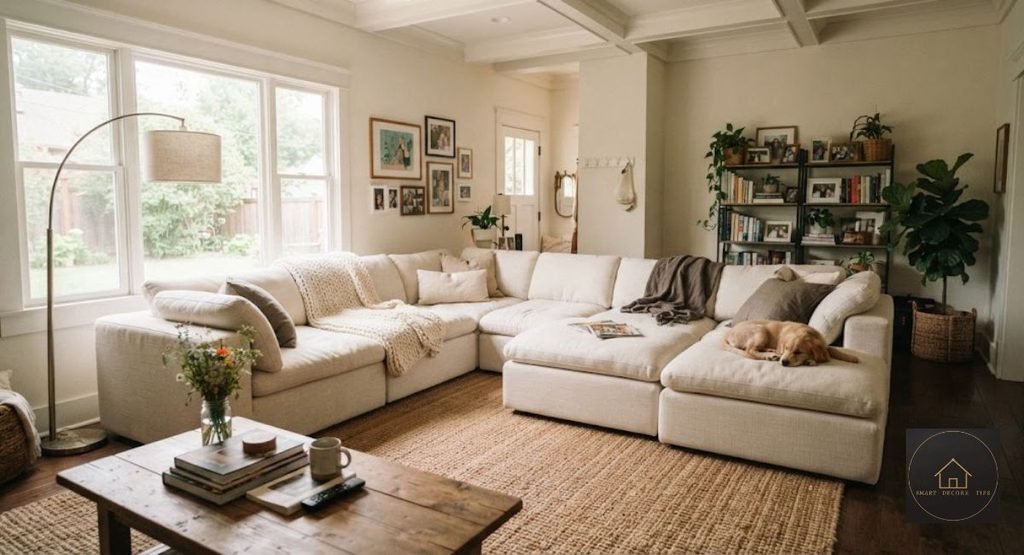
What is a cloud couch?
A cloud couch is a low, deep-seated sofa with oversized, soft cushions that let you sink in rather than sit upright. Most measure 29 to 40 inches deep, sit low to the floor, use down or soft foam fill, and arrive as modular sections you can rearrange.
Quick Takeaways
- The original is RH’s The Cloud, designed by Timothy Oulton, with a back just 24 inches high
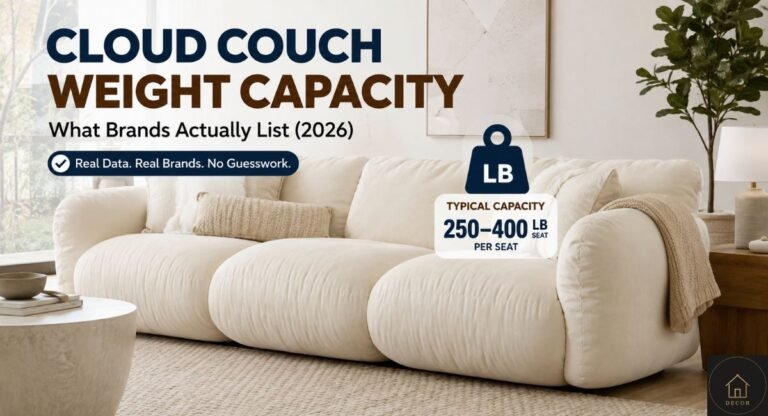
- Real seat depths on named products run 29–38 inches, not the 40–44 inches most articles claim
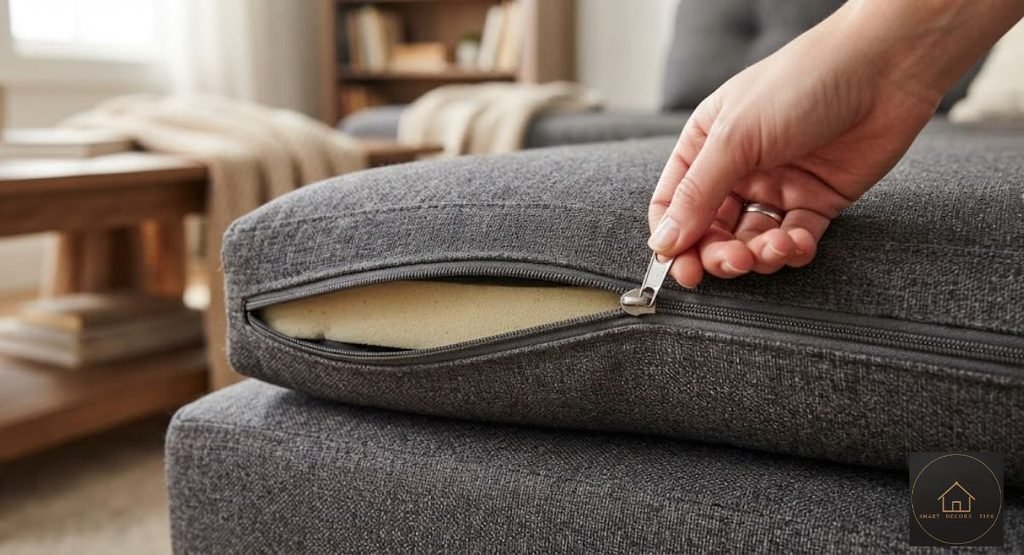
- Washable, zip-off covers matter more than fabric name
- Pillow-style cushions need fluffing; box-style cushions don’t
- Price tiers are roughly $700–$1,500, $1,500–$3,500, and $4,000+
The 40-Inch Seat Depth Claim Is Mostly Wrong
This is the correction that changes how you shop.
Go to the source. On RH’s own Cloud page, the collection comes in three arm styles, described by back height rather than seat depth: The Cloud at a low 24-inch back, the Cloud Track Arm at 28 inches, and the Cloud Slope Arm at 33 inches. RH sells the look on lowness and calls the piece guaranteed for life.
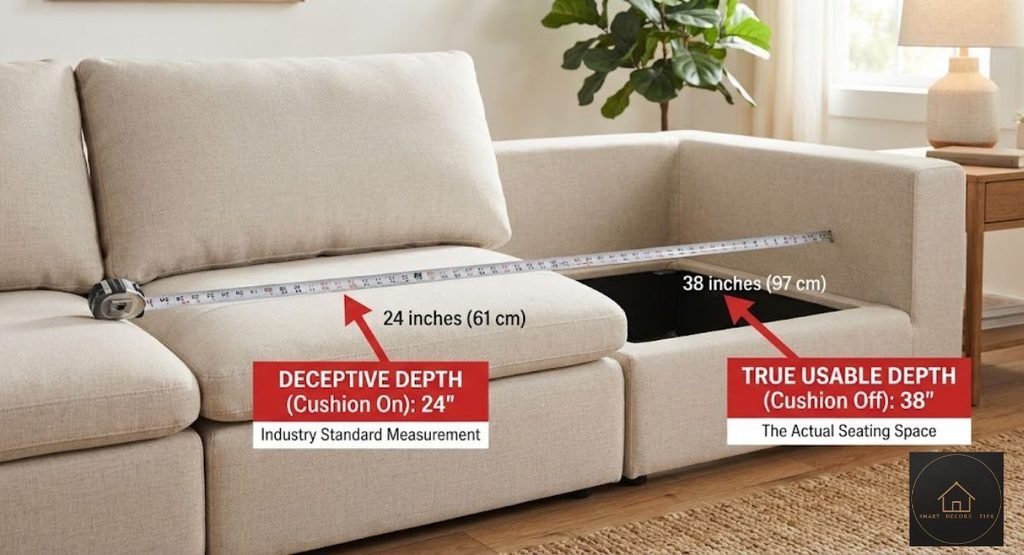
Now the best-selling alternative. Albany Park lists the Kova seat depth at 29 inches — or 36 inches with the back cushion removed. That second number is the one roundups quote as though it were the seat. It isn’t. It’s the frame depth behind a cushion you’d have to take off to use.
So when a listing promises a 44-inch seat, ask which measurement they’re quoting. A genuinely 40-inch seat is a daybed with arms. Most of what’s sold as cloud-style seating is a 29–36 inch seat that feels deep because the cushion is soft and the back sits low.
Standard sofas sit around 21–23 inches deep, so even 29 inches is a real change in how you use a room. Approximate — verify against the specific model you’re buying.
I taped my own out on the floor before ordering and still misjudged it. It took me about a week to stop feeling like I was falling backwards every time I sat down. That’s normal, and it passes.
What Real Products Actually Measure
Three named, currently-sold options, each traced to the brand’s own page:
| Product | Stated seat depth | Cushion fill | Covers | Frame / price signal |
| RH The Cloud | Not published as a seat number; 24″ back height | Feather-and-down over a foam core | Slipcovered | Guaranteed for life; sectional components reported by HGTV from $1,495 each, ~$12,000 configured (verify) |
| Albany Park Kova | 29″ (36″ without back cushion) | Hypoallergenic microfiber; Pillow rated 3/10 on softness, Box 4.5/10 | 32 performance fabrics, machine-washable | Made to order, free shipping |
| Lovesac Sactionals | Firmer, flatter sit than true cloud styles | Foam inserts | 200+ fabrics, machine-washable | Pre-configured setups from $3,250 |
One detail from Albany Park’s own product copy is worth more than any review: their Pillow cushions need occasional fluffing to keep shape, while their Box cushions hold shape without it. That single sentence tells you which version of this couch you’re actually signing up for.
What’s Actually Inside the Cushions
Fill decides the feel far more than fabric does, and it comes in three forms.
Down and feather gives the sink-in moment people are buying. RH describes The Cloud as feather and down built around a foam core, which is the honest version of this construction — pure down alone has no structure at all. Down feels best on day one and needs the most upkeep.
Loose fiber or microfiber is the mid-market answer. Albany Park fills the Kova with a hypoallergenic microfiber and rates its own cushions on a softness scale: the Pillow version sits at 3 out of 10, the Box version at 4.5. A brand publishing its own firmness scale is rare and useful — it means you can pick before you sit.
Foam is what most budget sofas use, sometimes wrapped in a thin fiber topper to fake the down look. Foam recovers shape on its own, which is why box-style cushions don’t need fluffing, and it flattens permanently if the density is too low.
There’s no best option here, only a trade you’re choosing. Softest on arrival means most maintenance. Lowest maintenance means least sink.
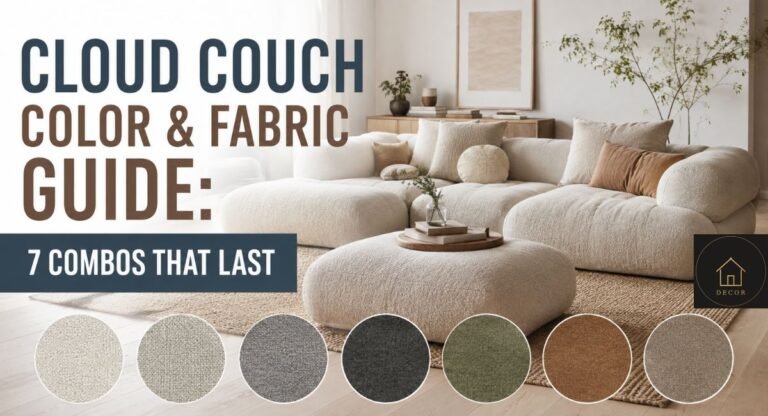
Chenille, Bouclé or Corduroy?
Corduroy has quietly taken over the budget end. Scroll the modular sectional listings on Amazon, Walmart and Target and the ribbed fabric is everywhere, usually paired with the compressed “boneless” construction that ships in boxes. It hides crumbs well and shows vacuum marks.
Chenille is the middle ground — soft, forgiving with pet hair, and the most common pick on mid-tier sectionals. Bouclé is the design-led option; Albany Park describes theirs as a looped, nubby weave, and that texture is exactly what snags on claws. If you have cats, chenille and bouclé are both riskier than the product photos suggest.
Performance linen is the one to look at if you want the pale, relaxed look without the regret. It’s woven for stain and liquid resistance rather than treated after the fact.
The real filter isn’t the fabric name at all. It’s whether the cover unzips. A washable mid-tier chenille beats an unwashable premium weave in any house with kids, dogs or a coffee habit.
What Delivery Actually Looks Like
Compressed sofas ship vacuum-packed and need time to expand — plan on giving cushions a day or two to reach full loft before you decide anything is wrong with them. Assembly varies more than the listings imply: some modular sets are genuinely no-assembly, others arrive in several boxes that don’t all turn up the same day. Lovesac says outright that Seats, Sides and Covers ship separately and may arrive on different days.
Read the return terms before ordering, not after. A 120-inch sofa is a freight item, and sending it back is nothing like returning a package.
Is a Cloud Couch Worth It?
Yes, if your living room is for lounging and you pick washable covers. No, if you work on the sofa, host upright, or live with anyone who struggles to stand from a low seat.
That’s the whole decision. The trade-off is comfort against structure, and it isn’t reversible with pillows.
Who this is not good for: anyone using the couch as a desk. Deep, soft seating pushes your hips back and your spine into a C-curve, and no cushion arrangement fixes that for a six-hour work day. If your living room doubles as your office, buy a structured sofa and put the budget into a chair.
7 Mistakes That Ruin the Purchase
- Trusting “extra deep” instead of a number. Ask for the seat depth in inches, measured with the back cushion in place. If a brand won’t give it, that’s your answer.
- Measuring the room but not the route. Doorway, hallway turn, stair landing, elevator. Modular pieces often ship as one bulky section, not flat-pack.
- Buying pillow-style cushions without accepting the upkeep. Plush fill flattens daily. If nightly fluffing will annoy you, buy box cushions.
- Picking cream linen for a house with kids or dogs. Deep, soft cushions don’t shed body impressions, and linen wrinkles permanently once compressed.
- Skipping the cover question. Zip-off, machine-washable covers are the single feature that decides whether this sofa survives year three.
- Ignoring seat height. These sit low. Add soft fill and standing up becomes a core exercise. Sit-test if anyone in the house has knee, hip or back issues.
- Not checking the frame. Kiln-dried hardwood at the stress points holds; particleboard and staples sag. The frame is hidden, which is exactly why it’s where cost gets cut.
How Do You Clean a Cloud Couch?
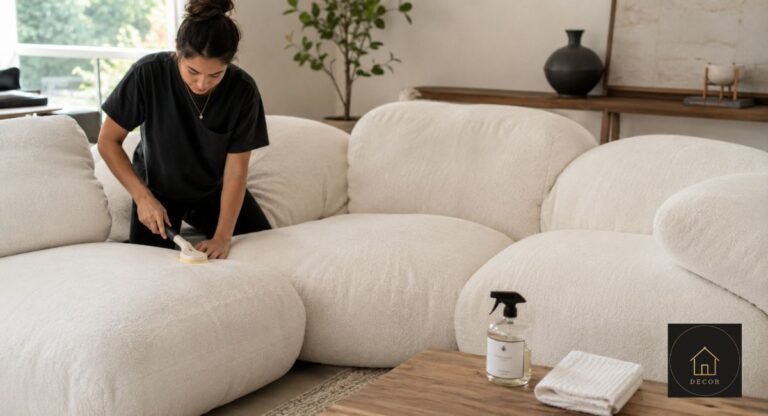
If the covers unzip, remove them and machine wash on cold, then air dry — most performance fabrics shrink in a dryer. If they don’t unzip, blot spills immediately, spot clean with a fabric-safe cleaner matched to the care-tag code, and expect stuffed cushions to take a full day to dry.
Here’s what I noticed after a year: removable-cover models cost more up front and save money anyway, because you stop paying for professional upholstery cleaning every time someone knocks over a drink. Check the care tag before you buy, not after — some covers are cold-water and air-dry only.
Do Cloud Sofas Sag Over Time?
All soft cushions compress; the question is whether they recover. Down and loose-fiber fills lose loft daily and need fluffing to bounce back. Foam recovers on its own but permanently dips if the density is low.
Foam is sold by density in pounds per cubic foot. High-resilience foam at roughly 2.0 lb/cu.ft or higher holds up; anything advertised as “high-density” with no number attached is marketing, not a spec. Ask for the number. Approximate thresholds — confirm with the manufacturer before you buy.
Sizing: Measure Before You Order
Three numbers decide this:
- Wall length. Large sectionals commonly run 105–132 inches wide. That’s more wall than most apartments have.
- Walking clearance. Leave at least 30 inches around the piece or the room feels blocked.
- Largest single carton. Not the assembled couch — the biggest box. That’s what has to clear your door frame.
If you want the full version of this, our 5-number couch measuring checklist walks through each measurement with the common mistakes.
Where to Buy, by Price Tier
$700–$1,500 — budget. Amazon, Walmart and Target carry corduroy and chenille modular sets with washable covers, often shipped compressed in boxes. Expect softer frames and fill you can’t get a density number for. Fine for a first apartment or a room you’ll redo in four years.
$1,500–$3,500 — mid. This is where specs get published. Albany Park’s Kova sits here, made to order with performance fabrics. Lovesac’s Sactionals start higher at $3,250 for pre-built setups but win on reconfiguring and re-covering rather than softness.
$4,000+ — designer. RH’s Cloud line and its peers. You’re buying down fill, a lifetime guarantee, and a silhouette the copies approximate but don’t match.
Secondhand is genuinely worth the patience. I’ve watched modular sectionals go for a fraction of retail on local listings — check weekly rather than once, and always ask for a photo of the cushion undersides. For how fill and fabric choices affect the final number, our couch color and material guide covers down versus foam in detail.
The Short Version
Buy for lounging, not for posture. Get the seat depth in inches with the cushion in place, confirm the covers come off, and check what the fill is made of. Get one wrong and you’ve bought a beautiful couch you quietly stop sitting on.
FAQs
A cloud couch is worth it if your living room is built for lounging and you choose zip-off washable covers; it is a poor buy if you work from the sofa, entertain upright, or live with anyone who struggles to rise from a low seat.
Most named cloud-style sofas measure 29 to 38 inches deep with the back cushion in place, compared with roughly 21 to 23 inches on a standard sofa. Albany Park lists the Kova at 29 inches, or 36 inches with the back cushion removed.
Cloud-style sofas are very comfortable for lounging, napping and movie nights, and noticeably uncomfortable for upright tasks like laptop work or dinner conversation, because the deep, soft seat pushes the hips back and rounds the lower spine.
All soft cushions compress. Down and fiber fills lose loft daily and recover with fluffing, while low-density foam develops permanent dips. High-resilience foam rated around 2.0 pounds per cubic foot or higher resists permanent sagging; a listing that says “high-density” without a number is not stating a spec.
Many current models have zip-off, machine-washable covers — Albany Park offers 32 machine-washable performance fabrics and Lovesac offers over 200 washable cover fabrics. Wash cold and air dry, and always check the care tag first, because some fabrics are air-dry only.
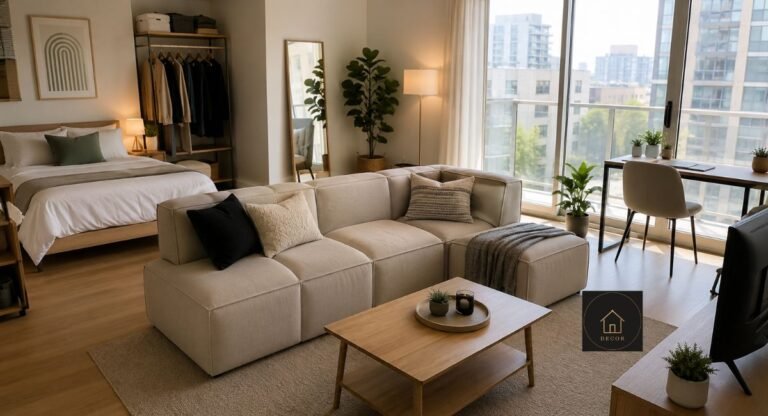
A full sectional at 105 to 132 inches wide will dominate a small room, but a two-seat module or cloud-style loveseat delivers the same deep, soft sit in a footprint that fits a studio or a room under 200 square feet. Leave 30 inches of clearance around whatever you choose.

Hi, I’m Shahzad Ahmad welcome to Smart Decore Tips!
I write and research every guide on this site myself, focused on real, practical home decor advice for renters, first-time homeowners, and small-space living. Before publishing anything, I check actual product listings, current prices, and real customer reviews not just what other sites already say.
My goal is simple: help you make smarter, more affordable decor decisions without the guesswork or sales pitch.

2 Comments